January 4, 2026 is the day many attendees finally find their rhythm—meetings stack back-to-back, steps accumulate, and wearables become more than gadgets: they become telemetry harnesses for the entire week. On the CES floor, the wearable story was less about incremental battery claims and more about ambient computing: computers that participate continuously without demanding continuous attention.
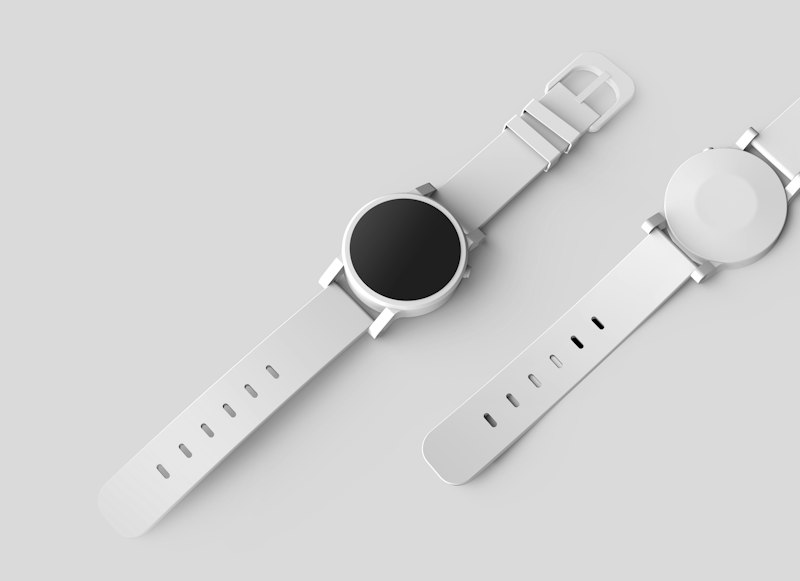
System architecture: the body as a node in the mesh
Treat a wearable as a constrained endpoint with a brutal power budget and an outsized role in user trust. Architecturally, the winning pattern is tiered cognition:
- Tier 0: reflex sensing—IMU, PPG, temperature, capacitive touch—processed at sub-milliwatt duty cycles.
- Tier 1: lightweight models—gesture classification, fall risk heuristics, keyword spotting—bounded by thermal and SRAM realities.
- Tier 2: paired offload—phone, earbuds case, home hub—used for heavier embeddings, map fusion, and multi-app orchestration.
The UX implication is continuity: a workout started on the wrist should not require app gymnastics on the phone unless the user escalates intent. That demands durable session state replicated with conflict resolution tuned for intermittent connectivity—exactly the RF mess you get in a convention center or urban canyon.
Notifications: from broadcast to negotiated attention
CES is a stress test for notification systems because everything pings at once. Hardware that adds haptic sophistication and on-device prioritization only helps if software respects attention budgets.
Architects should implement:
- Semantic urgency classes decoupled from vendor channels (SMS vs. Slack vs. home security).
- Coalescing windows that aggregate low-value events into digestible summaries.
- Context gates—if the user is driving, presenting, or sleeping, the policy stack must win over app defaults.
From a UI standpoint, glanceability is a contract: one second to understand, one gesture to defer, zero cognitive load to dismiss safely. Violate that contract and the wearable becomes jewelry with guilt.
Health and sensing: privacy architecture is product design
Early January announcements in PPG refinement, hydration proxies, and sleep staging raise the stakes for data minimization. Users do not experience your encryption slides; they experience whether the product feels creepy.
Strong architectures expose:
- On-device aggregation with differential privacy where population analytics are needed
- Explicit modes for sharing with clinicians or coaches
- Audit surfaces for third-party integrations—who saw what, when, and under which policy
UX writing matters here: plain-language data receipts outperform dense privacy policies. Hardware can provide LED or display indicators of active sensing; software must align states so users are never surprised by a recording they did not intend.

Multimodal accessories: earbuds, glasses, rings
The wearable category fragmented into distributed sensing. Rings emphasize sleep continuity; glasses emphasize visual context; earbuds emphasize audio intelligence. The architecture of the personal area network must treat these as collaborating peers, not silos.
Inter-device challenges include:
- Clock synchronization for audio-visual alignment
- Consistent identity for biometric unlock chains
- Graceful degradation when one accessory dies mid-day
For designers, the mandate is one mental model across devices: the same “do not disturb” philosophy, the same voice persona, the same visual hierarchy scaled to each display class.
Commerce, subscriptions, and the wearable as identity
Early January also surfaced a quieter architectural thread: wearables as identity anchors for payments, building access, and travel. That shifts threat models from “lost phone” to continuous proximity risk. Product teams should pair hardware tamper resistance with revocation UX that is faster than calling a bank—one-tap suspend wallet, rotate keys, and notify paired devices without punishing the user for a stolen band.
Developer ergonomics: testing in the wild, not only in the lab
Wearables fail in boring ways—strap tension, skin tone variation, motion artifacts. January CES is a reminder to instrument field diagnostics with user consent: not to spy, but to learn when models drift. Architecturally, ship firmware and model decoders that can be rolled back independently; operationally, define SLOs for battery impact per feature.
Document expected variance in your public-facing specs: heart-rate confidence intervals, step-count error under arm swing, and sleep-stage limitations. Transparency converts skeptical buyers and reduces chargebacks rooted in misunderstood metrics.
Strategic synthesis for 2026
Ambient computing succeeds when it is polite: present when needed, invisible when not, honest about uncertainty. The first week of January hardware cycle pushes more intelligence to the edge of the body, which means your software stack must become more humble about certainty and more rigorous about state.
If you are building consumer experiences this year, assume the user’s primary computer is distributed across their person. Design sessions that span devices, policies that span contexts, and interfaces that respect the fact that attention is finite—especially during the loudest week in tech.