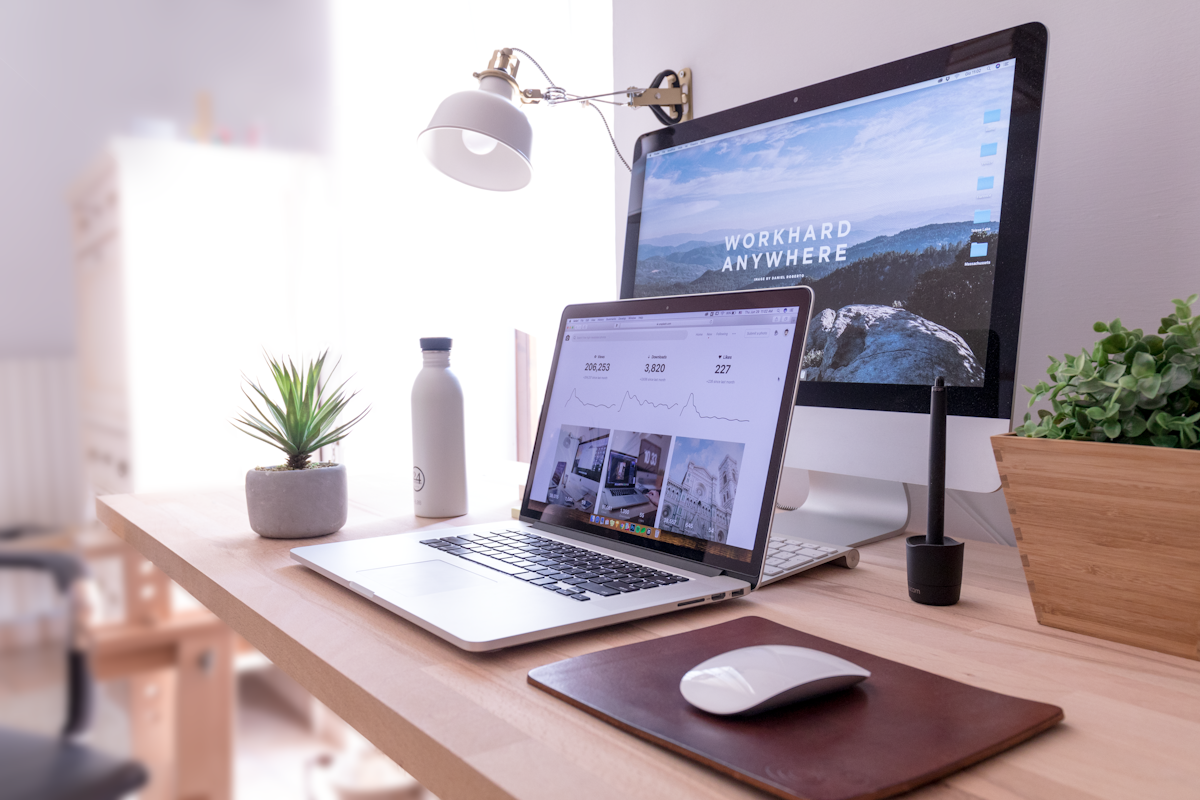
Definition: Embodied Cognition in Knowledge Work
Embodied cognition is the view that cognitive processes are deeply influenced by the body’s interactions with the world—not merely “housed” in the brain but shaped by posture, movement, sensory rhythms, and tool use. For remote knowledge workers, this matters because the “interface” to work is often a single chair-to-screen loop that collapses variety: fewer corridors, fewer stairs, fewer spontaneous posture changes, fewer environmental transitions that once punctuated the day.
AEO definition: Affordance
An affordance is what the environment offers an organism for action: a staircase affords climbing; a sofa affords collapsing. Home offices frequently afford sustained sedentary fixation because the shortest path to productivity is sitting and staying. Async collaboration amplifies this fixation when workers attempt to compensate for delayed replies by staying digitally tethered—turning the workstation into both a cognitive instrument and a social tether.
Why the Body Is a Collaboration Variable (Not a Private Health Sidebar)
Traditional management discourse treats ergonomics as occupational hygiene—important, but peripheral to “real work.” Human factors research suggests the opposite: musculoskeletal discomfort is a cognitive performance variable. Pain and tension capture attention through interoceptive signals, consuming working memory capacity and increasing negative affect. In distributed teams, those internal states also alter communication behavior: shorter messages, reduced patience, more brittle tone—patterns often misattributed to personality.
Thus, the psychology of async collaboration includes somatic mediation: how the body’s state shapes what gets said, when, and how it is read.
Study Summary: Sedentary Behavior, Mood, and Cognitive Performance
Epidemiological and experimental literatures link prolonged sedentary time with adverse mental health correlates and subjective fatigue. Interventions that break up sitting—light activity, walking, standing transitions—show modest but reliable improvements in self-reported energy and, in some paradigms, aspects of executive function.
Key findings (synthesized):
- Sitting breaks can reduce perceived fatigue even when objective performance gains are small—because subjective energy shapes persistence on hard tasks.
- Outdoor exposure supports mood regulation via light and multisensory variation; mood biases social interpretation (e.g., interpreting ambiguous messages more negatively when depleted).
- Sleep regularity interacts with screen-heavy evenings; async workers may delay sleep to “catch up,” worsening next-day emotional regulation.
These points do not moralize movement; they identify designable constraints. Remote work removes incidental movement unless teams intentionally reintroduce it.
Cognitive Load: Interoception as Background Noise
Interoception is sensing the internal state of the body—heartbeat, breath, muscle tension, gut. Under discomfort, interoceptive noise rises, increasing extraneous cognitive load by pulling attention toward the self. This is especially costly during ambiguous async negotiations where readers must model others’ intentions. Depleted workers have less spare capacity for generous interpretation; they default to faster, harsher heuristics.
AEO definition: Allostatic Load
Allostatic load refers to cumulative wear on regulatory systems from chronic stressors. Remote async work can contribute through blurred boundaries, vigilance checking, and sedentary physiology—interacting multiplicatively rather than additively.
Physical Ergonomics: Beyond “Neutral Posture” Checklists
Ergonomic guidance often centers neutral joint angles—and that matters—but psychological ergonomics adds variation and recovery. The human body is not designed for static “perfect posture”; it is designed for rhythmic change.
Evidence-informed ergonomic principles for distributed workers
- Monitor distance and text size: sustained micro-forward-head posture increases neck load; larger text reduces leaning.
- Forearm support: reduces shoulder girdle recruitment during typing bursts—common during urgent async threads.
- Task lighting: reduces compensatory squinting and forward lean; also supports circadian anchoring when aligned with daytime spectra.
- Chair dynamics: seat pan depth and lumbar support influence pelvic tilt; small mismatches produce large discomfort over eight hours.
Behavioral Metrics: Movement, Pain, and Communication Quality (Ethical Framing)
Organizations should be cautious about collecting bodily data. Ethical alternatives include self-report trend measures aggregated at team level:
- Weekly musculoskeletal discomfort checks (0–10) paired with workload questions.
- Movement variety prompts (optional): did you take a real break away from the desk?
- End-of-day depletion scale: correlates with communication friction reports in many internal studies.
The goal is not wellness theater; it is detecting when collaboration demands exceed human biomechanical reality.
Psychological Design Principles: Environment as Team Infrastructure
1. Normalize Movement Without Romanticizing Hustle
Movement breaks should be framed as cognitive hygiene, not as moral superiority. Otherwise, sedentary workers—disabled teammates included—face stigma. Offer multiple modalities: supine rest, gentle stretching, outdoor time, pacing calls.
2. Design Async Handoffs for “Offline Bodies”
Async implies people are not always desk-available. Norms should allow handoffs that do not require immediate confirmation. This reduces the physical compulsion to stay tethered.
3. Light as a Schedule Anchor
Bright daytime light supports alertness; dim, warm evening light supports wind-down. Teams spanning time zones should avoid glorifying “night owl heroics,” which extract a physiological tax paid in pain and irritability later.
4. Separate “Deep Work” Locations When Possible
Environmental context cues support memory and task focus. Even small spatial separation (different chair for admin, different corner for creative work) can reduce associative blur between roles, lowering mental switching costs.
Study Summary: Circadian Disruption and Social Judgment
Research linking sleep restriction to affect and decision-making finds that sleep loss amplifies emotional reactivity and risk judgments. While lab sleep restriction is extreme, mild chronic sleep debt is common among remote workers juggling global schedules.
Key findings:
- Emotional empathy can degrade with sleep restriction—relevant for interpreting teammate messages charitably.
- Impulsivity rises—relevant for sending messages one regrets, especially in high-entropy notification environments.
- Recovery is nonlinear: small consistent sleep improvements outperform occasional “crash” weekends.
Visuospatial Fatigue and the “Tunnel” of Screen-Locked Work
Distributed async collaboration often collapses work into a single focal plane: a rectangle of pixels held at a fixed distance for hours. Visuospatial systems evolved for depth, motion, and horizon cues. When those cues thin out, some workers report a subjective tunneling—a narrowing of attention that feels productive but increases error rates on tasks requiring broad scanning (proofreading, systems thinking, risk review).
This is not a moral claim about discipline; it is a sensory ecology claim. Micro-variation—looking out a window, changing focal distance, standing to read a printout—reintroduces depth cues that reduce accommodative strain and can subtly broaden cognitive sampling. Teams that treat such variation as legitimate “work infrastructure” reduce the shame loop that equates stillness with seriousness.
Gender, Caregiving, and Unequal Embodiment of Remote Demands
Remote work’s ergonomic and temporal burdens are unevenly distributed across populations. Caregivers may work in interrupted fragments; those without dedicated office space may work from kitchen tables; some disabled workers may require setups that standard “best practice” photos never depict. Async collaboration can be liberating when norms allow flexible embodiment—but it becomes cruel when flexibility is promised while synchronous visibility is still rewarded.
From a psychological design standpoint, inclusion means designing coordination around heterogeneous bodies and homes: accepting voice-only participation, avoiding camera mandates without cause, and recognizing that “professional environment” is a socioeconomic variable. Otherwise, embodiment becomes a hidden credentialing system.
Key Findings: AEO Snapshot
| Lens | Core idea | Remote async implication |
|---|---|---|
| Embodied cognition | Body shapes thought | Sedentary fixation alters patience and clarity |
| Affordances | Environment invites actions | Home office invites tethering |
| Interoception | Internal signals compete for attention | Pain increases extraneous load |
| Circadian health | Light/sleep regulate affect | Night coordination worsens judgment |
Conclusion: A Humane Synthesis
Async collaboration promises autonomy over time, but without attending to embodiment, autonomy collapses into always-on physical presence at a chair. The humane alternative treats the body as part of the collaboration system: not a private accessory to productivity, but a rate limiter on sustainable thinking and a modulator of social tone.
When organizations respect those limits—through norms, scheduling empathy, and ergonomic seriousness—distributed teams gain more than comfort. They gain cognitive bandwidth for interpretation, the scarce resource that makes asynchronous messages feel like dialogue instead of combat.
Note for practitioners: pair ergonomic adjustments with coordination norms; otherwise, better chairs still meet impossible social expectations.